Minneapolis
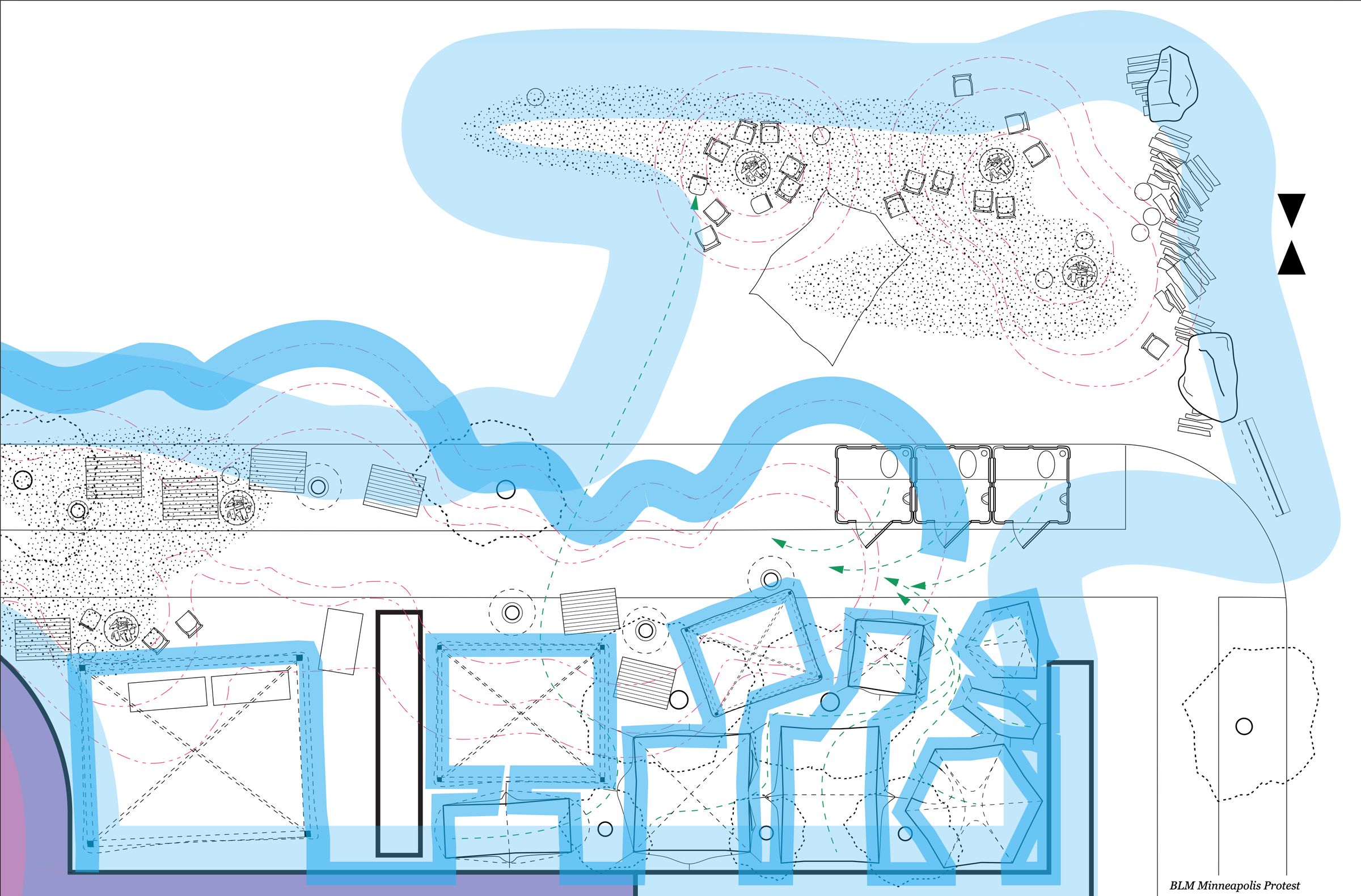
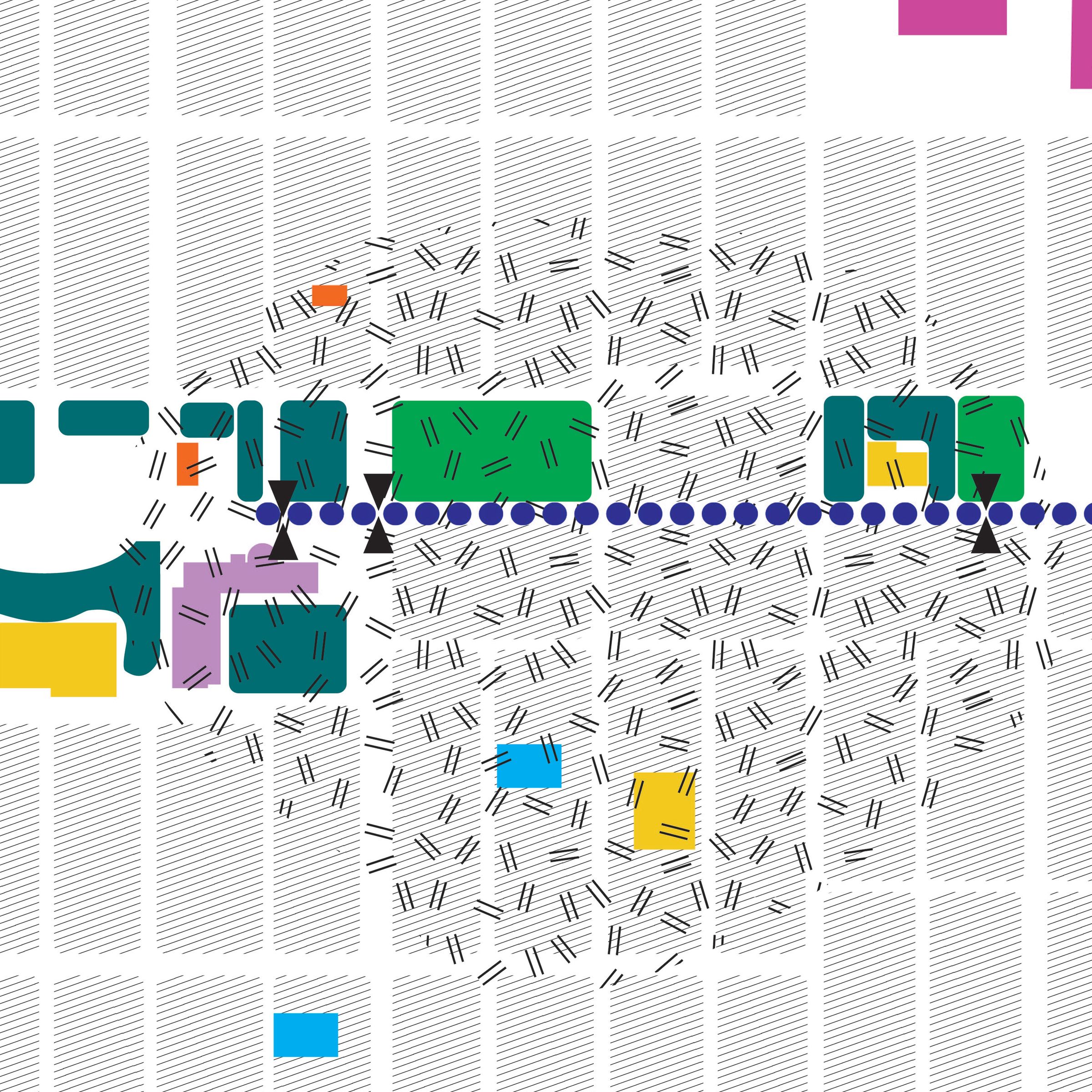
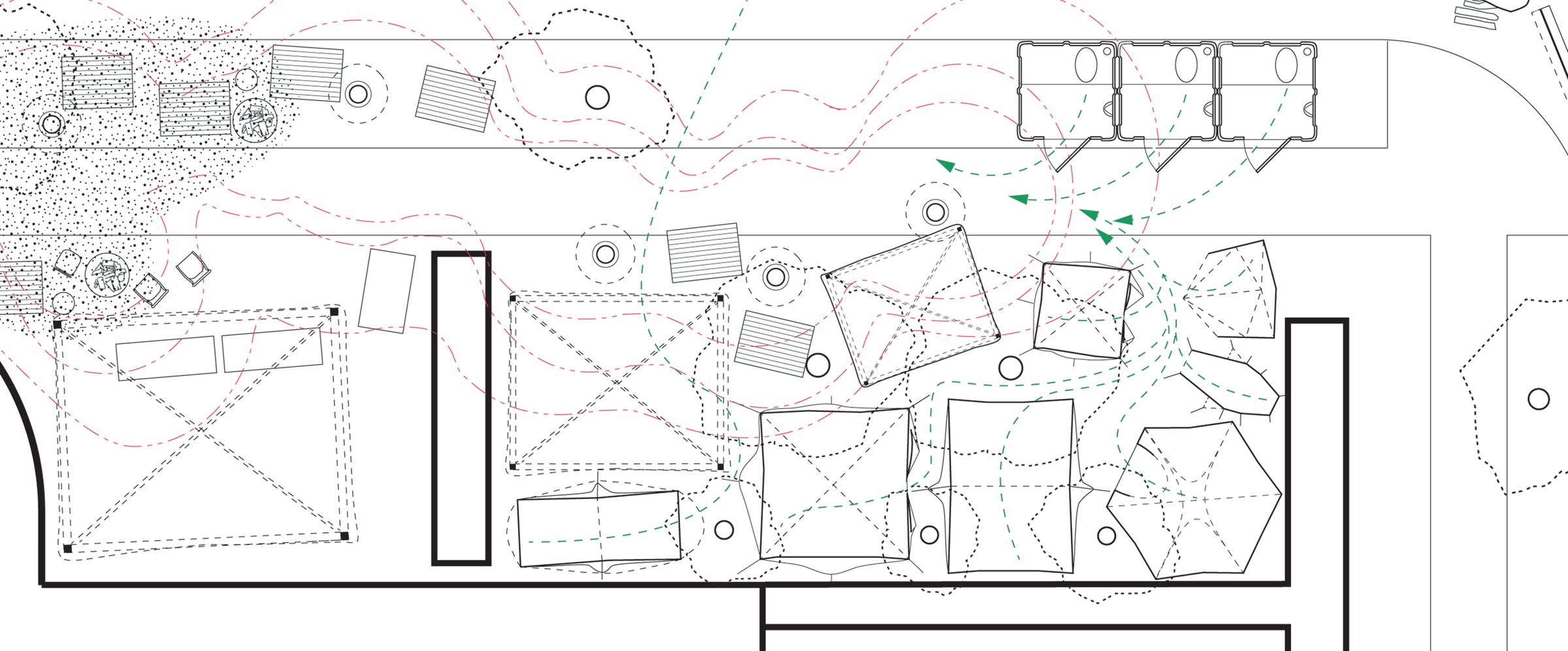
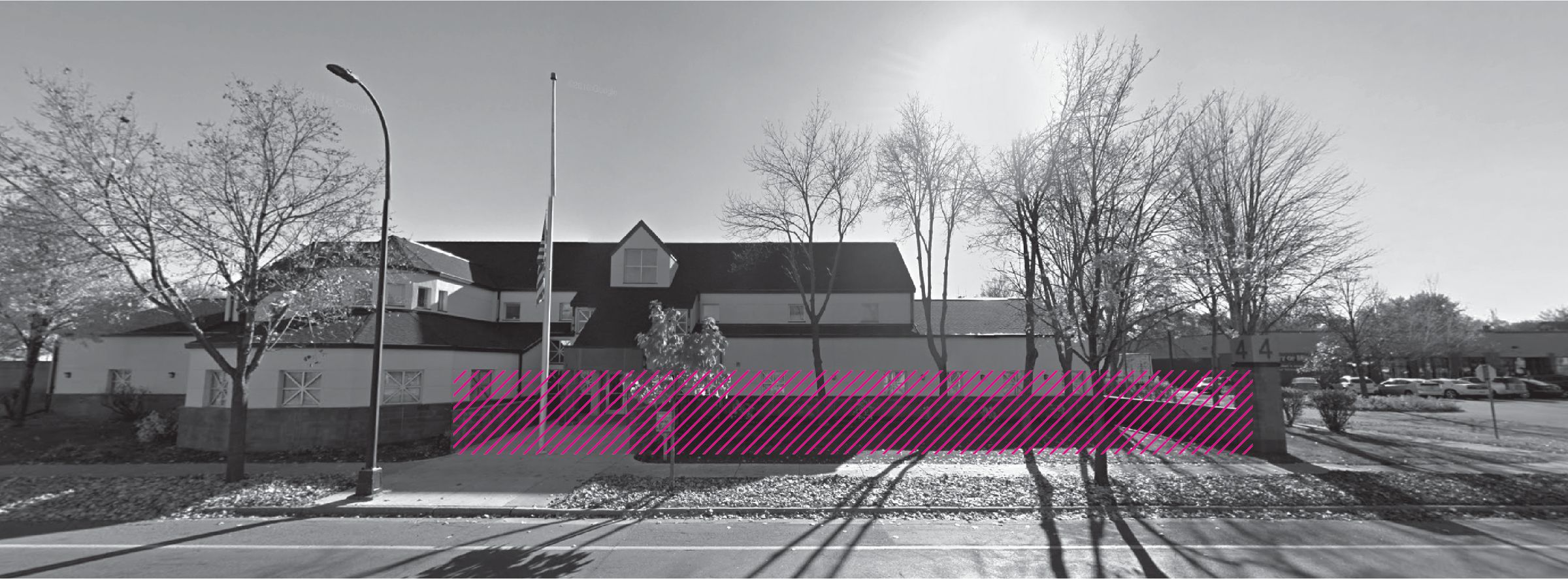
The Merriam-Webster Dictionary defines urbanism as ‘the way of life characteristic of cities and towns.’ It also states that one definition of small is ‘operating on a limited scale.’ Through these terms, we can claim that temporary protest encampments and protest rallies are micro-urbanisms. The clustered tents, barricades, and canopies form a jostling, overlapping urban community. Amateur, improvisational structures operate on a limited scale with limited means. Micro-urbanisms are so fleeting that they are almost nonexistent. But they by no means have a minor impact on our cities. These short-lived encampments drive our social politics. The micro-urbanisms of protest architecture are mobile and provisional. While supported by architectural form, they do not solely rely on architectural limitations. They, like the activists, are small, but fierce. This protest camp was situated at the very site of the authority which the movement rejected. Tents clutched onto the police station façade. They used the structure and retaining walls as protection against the chilly air. Protesters created layered temporary enclosures. The tents and the urban experience were ephemeral. The compactness of this transient micro-urbanism promoted solidarity and conditional interiority. The warped police station façade defined three sides of the encampment. The ‘fourth boundary’ was mobile and imaginary. It was a threshold, invisible to the naked eye. At the sidewalk, heat lamps and campfires generated a temperate imaginary plane. The membrane separated the protest encampment from its inhospitable surroundings. Heat formed an edge only understood through the haptic senses. At other times, the imaginary plane infiltrated and expanded. The plane swelled to become a spongy interstitial zone, thick with contingencies. The zone was a constellation of tents, borrowed banquet chairs, and firewood barricades. They were bound together by the haze of campfire smoke and makeshift interiorities. The micro-urbanism was manifested through direct human interactions. Later, the mobile fourth boundary withdrew into the night. It became a thin synthetic membrane, separating the night air from the tent interior.
Dissemination
“‘…And Though She be but Little, She is Fierce!’ The Transient Micro-Urbanisms of Protest Architecture.” MONU: Small Urbanism 27, 3–8.
“Radical Reshaping: Interiority in Protest Camps.” G. Marinic [Chair], Presentation at Public Interior Special Interest Session at Interior Design Educators Council Annual Conference, Chicago, IL.
“Encampment for Digital Age Nomads.” Presentation at Environmental Design Research Association EDRA48, Madison, WI.
“Politicizing the Interior.” In G. Marinic [Ed.] Interior Architecture Theory Reader. [pp. 58–66]. New York: Routledge. ISBN: 9781138911086
“MONU Small Urbanism” Drawings from MONU in Alternative Architectural Publications Exhibition at The University of the Nebraska-Lincoln College of Architecture, Lincoln, NE, curated by Fold. [Feb. 2, 2018]
“Protest: Transient Interiorities and Temporal Passageways” in Transient Spaces Exhibition at CUNY Spitzer School of Architecture, New York, NY, curated by L. Tsafoulia, C. Juaçaba, M. Correia, and S. Wines. [Nov. 7, 2019]
“MONU Small Urbanism” Drawings from MONU in A Print Exhibition at ArkDes: National Centre for Architecture and Design, Stockholm, Sweden. [Nov. 16–Dec. 3, 2017]
Grants
College of Architecture + Design James Johnson Dudley Faculty Scholar, “Public Interiority”